 KH
KH  FR
FR  AR
AR CN
CNFeature Report: A Historic Commitment: Cambodia Moves to Eliminate Large-Scale Online Scams
AKP Phnom Penh, September 20, 2026 --
Cambodia’s declaration that major online scam centres have been completely shut down marks a significant turning point in its campaign against technology-facilitated crime, following a large-scale crackdown launched in mid-2025 and continuing through August 2026.
The campaign has not only targeted the strongholds of transnational criminal groups and their influential ringleaders, but has also demonstrated the Royal Government’s commitment to strengthening law enforcement and addressing online scams, while seeking to restore confidence in Cambodia’s image on the international stage.
The new development signals a shift in Cambodia’s efforts to combat online scams, with the country positioning itself as an active partner in international cooperation against transnational crime rather than a place where large-scale scam operations can operate openly.
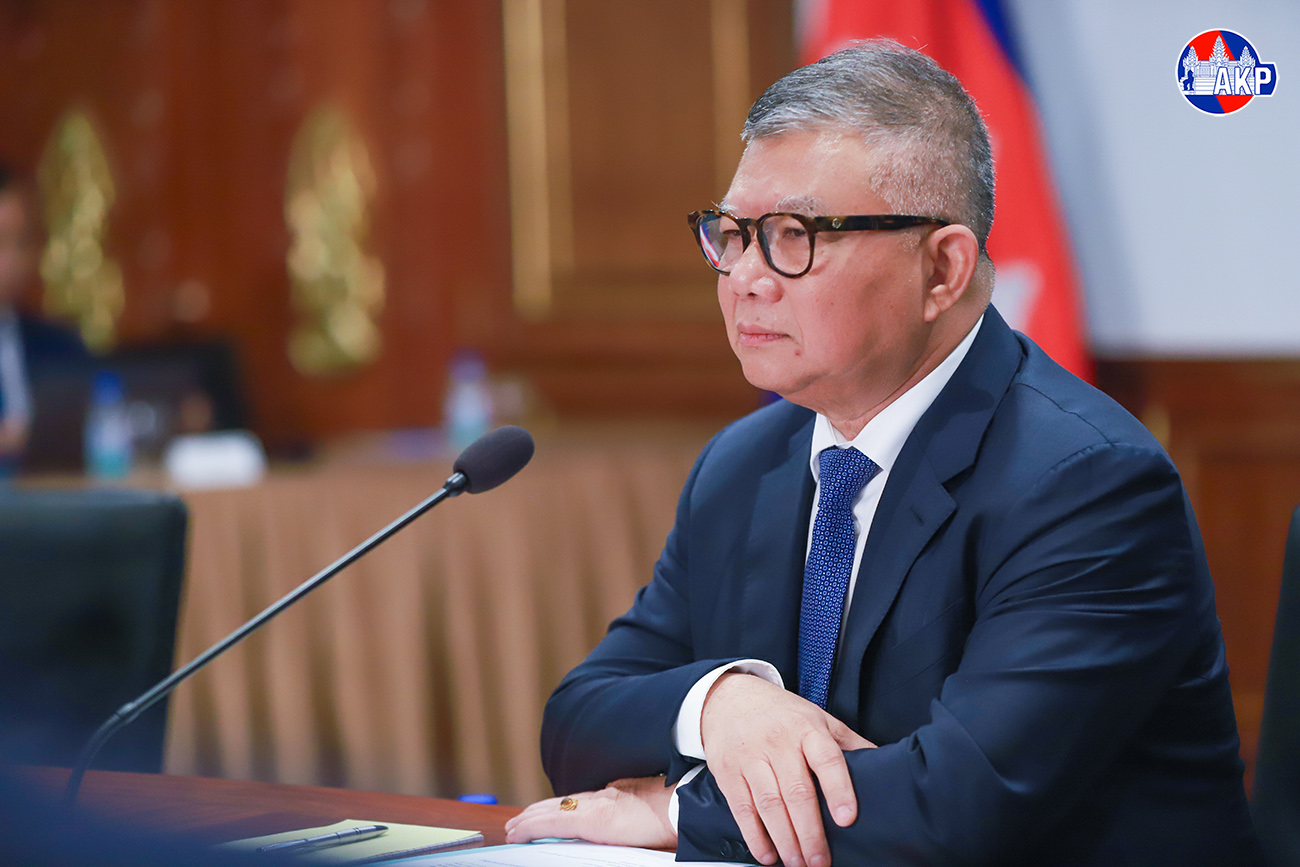
H.E. Chhay Sinarith, Senior Minister and Chairman of the Secretariat of the Ad Hoc Commission for Combating Online Scams (CCOS), told around 50 representatives of diplomatic missions and international organisations in Cambodia on Aug. 27 that Cambodia currently has no major online scam centres following the nationwide crackdown.
At the same time, Cambodian authorities have taken legal action against offenders, criminal networks and officials allegedly involved in facilitating or protecting scam operations. Under a campaign led by the Anti-Corruption Unit (ACU), 15 senior officials and law enforcement officers were arrested and removed from their positions over alleged collusion, facilitation or protection of scam compounds.
The campaign has also targeted prominent figures allegedly linked to transnational criminal and financial networks, including Chen Zhi, Chairman of Prince Holding Group, who was arrested and extradited to China in January 2026, and Li Xiong, Chairman of Huione Group, who was extradited to China in April 2026.
However, the Ad Hoc Commission has stressed that the closure of large-scale compounds does not mean that online scams have disappeared completely. Criminal groups are changing their methods by moving into smaller operations in rented houses, apartments, condominiums, cafés and mobile locations, making them more difficult to identify.
A recent operation in Koh Kong province, in which authorities detained 33 Chinese nationals and seized more than 700 mobile phones from a rented house, illustrates the changing nature of such activities. Cambodian authorities have continued investigations and operations against these smaller networks.
H.E. Chhay Sinarith acknowledged that online scam crime remains a complex global threat, as criminal groups rapidly relocate and change their methods. Nevertheless, he said that Cambodia has brought large-scale scam activities under control and that major scam centres no longer operate in the country.
“Major scam centres have been completely cleared, while strict legal measures have been taken against criminal targets and relevant officials,” he said.
To prevent the resurgence of such crimes, the Royal Government is strengthening the legal and administrative framework, including the use of technology-related crime laws to impose severe penalties on online scam ringleaders, potentially including life imprisonment and the confiscation of their assets as state property.
Cambodia is also increasing administrative inspections of foreign nationals residing in condominiums and housing developments and tightening checks on travel documents for citizens considered to be at high risk. Meanwhile, it is accelerating the preparation of additional legal instruments, including draft laws on cybersecurity and information technology crimes, as well as regulations governing virtual assets.
“The development and strengthening of this comprehensive legal framework reflect Cambodia’s political will and proactive approach to eliminating and preventing these crimes from taking place in Cambodia and to ensuring socio-economic security,” H.E. Chhay Sinarith said.
As part of its broader efforts, Cambodia will host the International Conference on Combating Online Scams from Sept. 23 to 24, 2026, under the theme “Acting Together towards Breaking the Chain and Eradication of Online Scams.” The event will bring together government representatives, international organisations, law enforcement agencies, financial institutions, technology companies, research institutions and other stakeholders to exchange experiences and strengthen cooperation against the global threat.
H.E. Chhay Sinarith called for active international cooperation, stressing that combating online scams requires practical cooperation and genuine political will. He reaffirmed Cambodia’s openness to international partnerships to prevent such crimes from returning and to strengthen its contribution to combating online scams in the region and beyond.
The 2025-2026 campaign has therefore marked a new phase in Cambodia’s fight against online scams. While criminal groups may continue to adapt by shifting to smaller and more concealed operations, strengthened laws, enforcement mechanisms and international cooperation are expected to remain key to preventing their resurgence and protecting the security of Cambodia’s digital and socio-economic environment.


By C. Nika