 KH
KH  FR
FR  AR
AR CN
CNCambodia Agrees to Reduce Tensions, but Rejects Withdrawal from Its Territory
AKP Phnom Penh, June 06, 2025 --
Cambodia has agreed to reduce tensions and maintain mutual communication, understanding, and peaceful dialogue to avoid military clashes. However, it has firmly rejected any withdrawal from its own territory, according to the Ministry of National Defence.
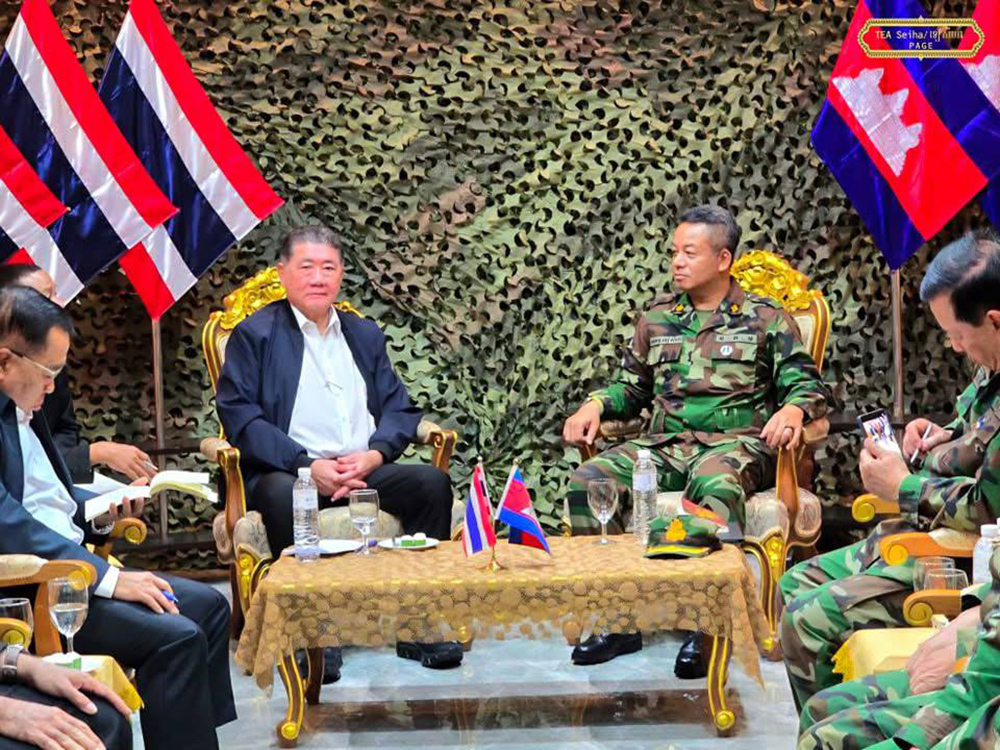
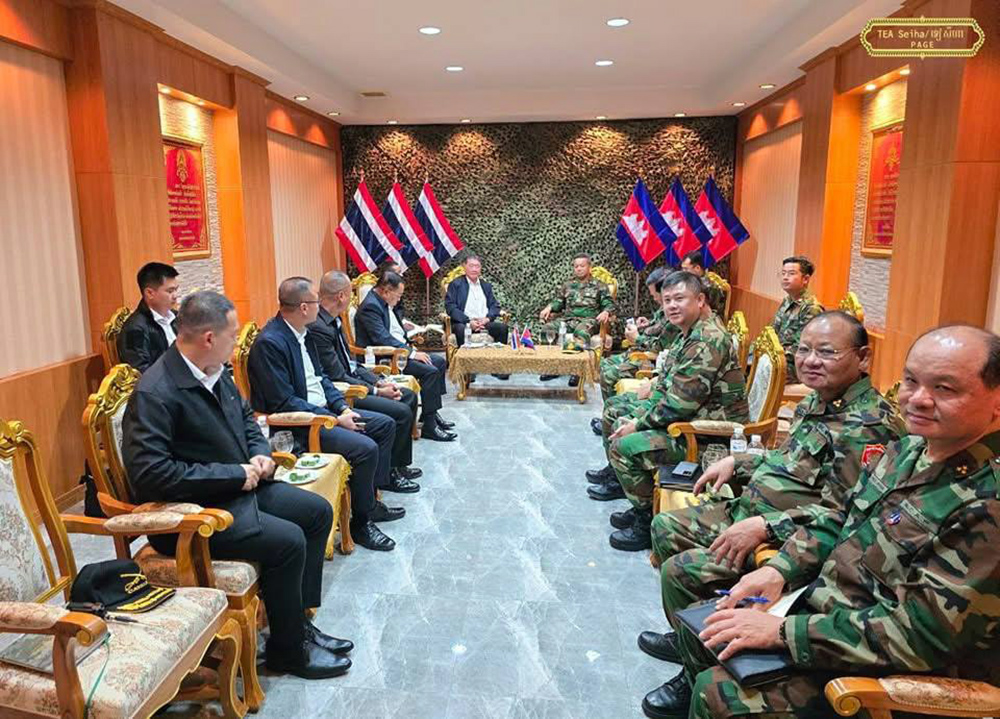
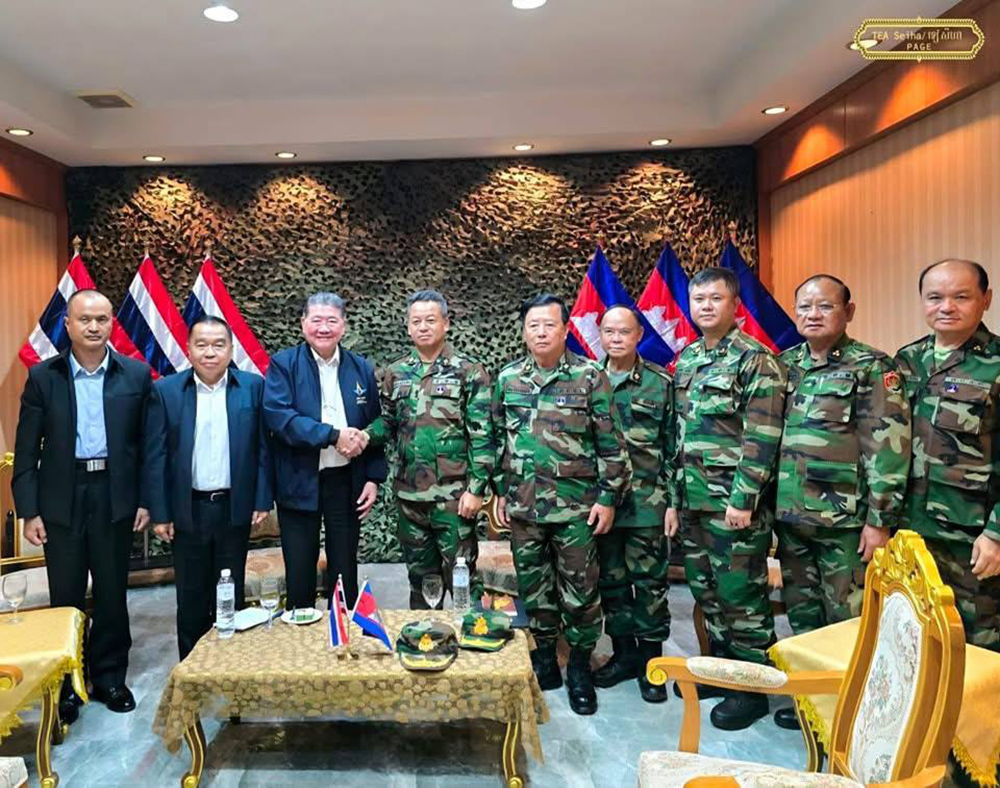
This statement was made during a bilateral meeting between H.E. Gen. Tea Seiha, Deputy Prime Minister and Minister of National Defence, and his Thai counterpart, H.E. Phumtham Wechayachai, held in Aranyaprathet district, Sa Kaeo province, Kingdom of Thailand.
In response to Thailand’s request for Cambodian troops to withdraw from their current positions in the Mom Bei area—where a clash occurred on May 28, 2025—the Ministry of National Defence stated that Cambodia declined the request. It emphasised that the location is within Cambodian territory, where Cambodian troops have been permanently stationed since the outset.
“Cambodia cannot withdraw from a position where its troops have long been stationed, especially since this area is part of Cambodian territory,” the source affirmed.
The ministry further stressed that as long as Thailand continues to use maps with differing scales and interpretations, it will be difficult to find common ground necessary to maintain border stability.
The ministry also reiterated Cambodia’s commitment to the 2000 Memorandum of Understanding (MOU 2000), as it has consistently respected in the past. He also reaffirmed Cambodia’s strong stance on resolving longstanding border disputes and determining the precise boundary with Thailand through the International Court of Justice (ICJ), particularly regarding four sensitive areas: Mom Bei, Ta Moan Thom Temple, Ta Moan Tauch Temple, and Ta Krabei Temple.
“Cambodia is committed only to peace, stability, and the well-being of people on both sides,” the Ministry of National Defence emphasised.
In this context, the ministry noted that the Thai side also expressed respect for Cambodia's right to bring the issue to the ICJ. Both sides agreed to continue discussions through the existing mechanisms, including the Cambodia–Thailand Joint Commission on the Survey and Demarcation of Land Boundary (JBC), the General Border Committee (GBC), and the Regional Border Committee (RBC) for future matters.
Additionally, the Thai side rejected all provocative information that could affect the morale of the two militaries and the sentiments of the two peoples, such as rumors about international border closures, the cancellation of the JBC meeting, and other unofficial reports.
By Heng Panha